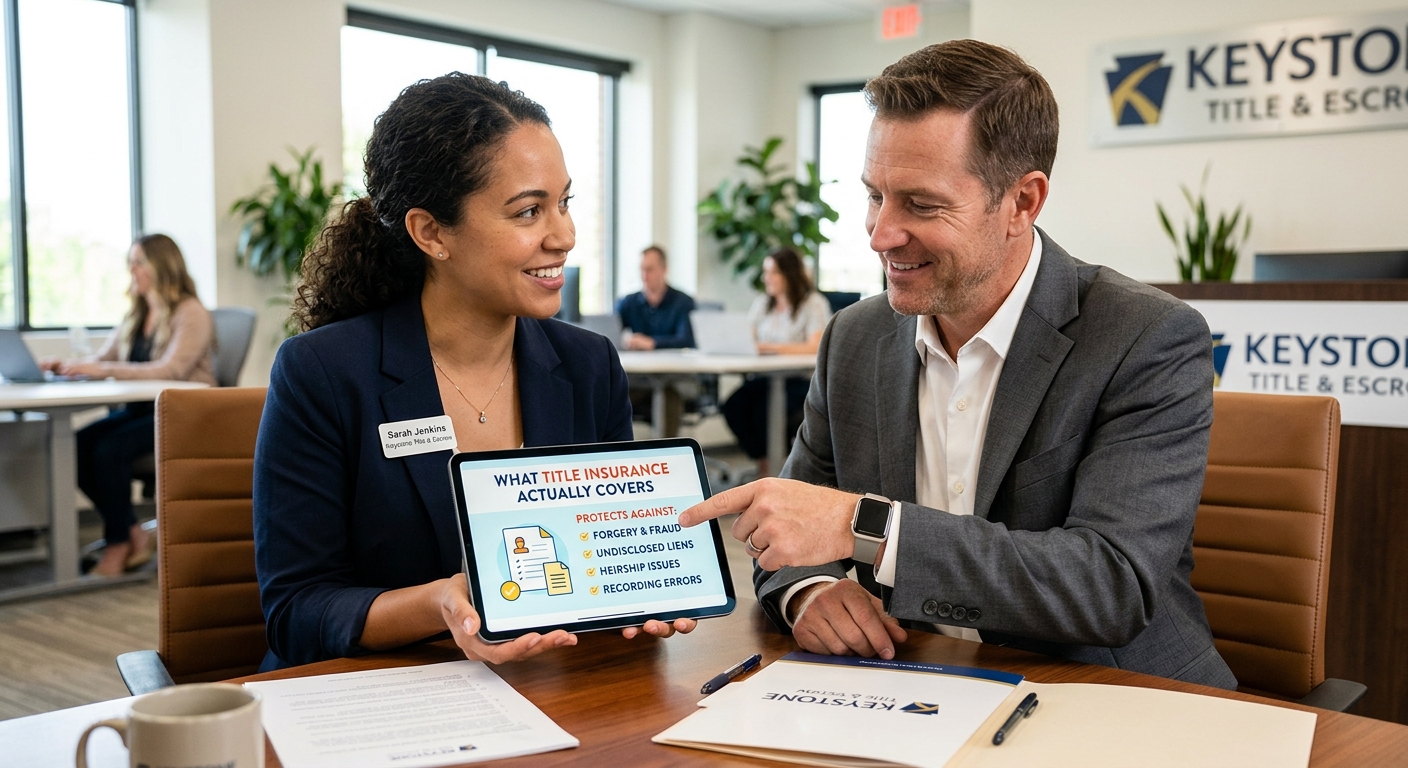
What Title Insurance Actually Covers (in Plain English)
Of all the line items on a closing statement, title insurance is the one that makes first-time buyers squint. You are already handing over a down payment and a stack of lender fees — what exactly is this policy, and why do you need it?
Here is the short version: title insurance protects your legal ownership of the home against problems that already existed before you bought it. Not future damage, not a leaky roof — the past.
The problems it protects against
When you buy a home, you are not just buying the building. You are buying the title — the legal right to own and use the property. A title can carry hidden defects that no walkthrough would ever reveal:
- A forged signature somewhere in the chain of past owners.
- An unknown heir who has a claim to the property.
- A clerical or recording error at the county.
- An old, unpaid lien from a contractor or a prior owner’s tax debt.
- An easement or boundary dispute that was never properly recorded.
Any one of these can surface years after you move in. Title insurance is what stands between you and the legal bills to defend your ownership — or the loss of the property itself.
Owner’s policy vs. lender’s policy
There are two policies, and they are not the same. A lender’s policy protects the bank’s interest in the loan — it is almost always required, and it does nothing for you. An owner’s policy protects your equity. It is optional in Arizona, but it is the one that actually protects the buyer.
Why it is a one-time cost
Unlike your homeowner’s insurance, an owner’s title policy is paid once, at closing, and it protects you for as long as you own the home. There are no monthly premiums. It is a single payment for decades of protection.
At Keystone, part of our job is running an exhaustive search of the public record to find and clear these defects before you ever get to the closing table — so the policy is a backstop, not a crutch. If you have a question about your own file, ask your closer. We would rather explain it twice than have you sign something you do not understand.